


Page Summary
- Concrete foundation damage is identified through expert inspection that focuses on safety risks, structural movement, and repair scope before conditions escalate.
- Foundation repairs use durable materials such as Portland cement based repair mortars, polymer systems, aluminum, and fiber mesh, with finishing steps that reduce visible patching on stem walls.
- Common drivers of cracking and settlement include expansive clay, poorly compacted fill, water saturation, and maintenance issues, with added deterioration risk from freeze thaw exposure and corrosion around reinforcing steel.
Concrete foundations in Arizona take a daily beating from heat, soil movement, irrigation, drainage problems, and normal concrete aging. When cracks widen, floors feel uneven, doors start sticking, or stem walls begin spalling, the issue is rarely cosmetic. Concrete foundation repair restores stability, reduces ongoing movement, and helps protect the value and safety of a home or commercial property.
At Concrete Repairman LLC, concrete foundation repair starts with a field focused inspection that connects visible symptoms to likely structural causes. Repair plans are built around the foundation type, the condition of the concrete, and what is driving the damage, such as expansive clay, compressible fill soils, or repeated water saturation near the footing. The result is a repair approach that targets the problem, not just the surface.
Concrete Foundation Repair and Fixes
Most concrete foundation repair inspectors and general building contractors can often recognize possible foundation or other building problems that may be costly or dangerous, requiring the intervention of an expert foundation repair specialist like James Belville to make the inspection and repairs. Home inspectors are often not qualified or may not be educated in the foundation installation and repair industry and may not know or recognize these problems.
Without performing any expensive engineering calculations or analysis, James Belville can recognize signs of important foundation problems and other structural issues developing before engineers and foundation experts are asked to design and repair for catastrophic building failure.
James Belville’s field inspection experience and education, combined with an informed and careful inspection, provide building owners with valuable information and the costs of those repairs. Call James Belville today.
Foundation Repair
We use the latest in high-grade polymer, aluminum, fiber mesh, and Portland Cement to provide the highest-quality foundation repair possible. In addition to repairing the foundation, we also grind the stem wall. ” It is like we weren’t even there, and nothing happened to the foundation at all.
Foundation settlement and movement that require foundation repair can be caused by building on expansive clay, compressible or improperly compacted fill soils, improper maintenance around the foundation, or water saturation.
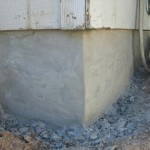 Whatever the cause, settlement can destroy the value of structures and even render them unsafe. If you see signs of foundation distress, don’t delay in getting your home repair problem solved. Experience has shown that there are certain portions of exposed concrete structures more vulnerable than others to deterioration from weathering in freezing climates.
These are exposed surfaces of the top 2 feet of walls, piers, posts, handrails, and parapets; all curbs, sills, ledges, copings, cornices, and corners; and surfaces in contact with spray or water at frequently changing levels during freezing weather. Preventive maintenance, such as weatherproofing treatment with concrete sealing compounds, can considerably improve the durability of these surfaces and greatly prolong serviceability.
Request an Estimate
(602)418-2970
Selecting the most satisfactory protective treatment depends greatly upon correctly assessing the exposure environment. Concrete sealing compounds and coatings that provide good protection from weathering in an essentially dry environment may perform poorly in abundant water, such as on some bridge curbs and railings, stilling basin walls, and piers. Freezing and thawing tests of concrete specimens protected by various concrete sealing compounds and coatings, including linseed oil, epoxy and latex paints, chlorinated rubber, and water-proofing and penetrating sealers, have been performed in Reclamation laboratories. These tests indicate that proprietary epoxy formulations, silicone and saline formulations, and high molecular weight formulations excel in resisting deterioration caused by repeated freezing and thawing in the presence of water.
None of these formulations, however, will totally “waterproof“ concrete. That is, they will not prevent treated concrete from absorbing water and becoming saturated under complete and long-term submergence conditions. Except for hand-placed mortar restorations and repair of deteriorated concrete, concrete sealing compounds are ordinarily not applied on new concrete construction. The treatments are most commonly used on older surfaces when the earliest visible evidence of weathering appears. The treatment is best used before deterioration advances to a stage where it cannot be arrested.
Such early evidence primarily consists of fine surface cracking close and parallel to edges and corners. Pattern cracking, surface scaling or spalling, and shrinkage cracking may also indicate the need for protection. By treating these vulnerable surfaces in the early stages of deterioration, later repairs may be avoided or at least postponed for a long time.
Foundation Repair Experts
Repair home foundations and concrete floors using these tips and techniques.
Excess Concrete Mix Water.—The use of excessive water in concrete mixtures is the single most common cause of damage to concrete. Excessive water reduces strength, increases curing and drying shrinkage, increases porosity, increases creep, and reduces the abrasion resistance of concrete. Figure 16 shows the cumulative effects of the water-cement ratio on the durability of concrete. In this figure, high durability is associated with a low water-cement ratio and the use of entrained air. Damage caused by excessive mix water can be difficult to correctly diagnose because it is usually masked by damage from other causes. Freezing and thawing cracking, abrasion erosion deterioration, or drying shrinkage cracking, for example, is often blamed for damage to concrete when, in reality, excessive mix water caused the low durability that allowed these other causes to attack the concrete.
During petrographic examination, extreme cases of excessive mixed water in hardened concrete can sometimes be detected by bleed water channels or water pockets under large aggregate. More commonly, examination of the batch sheets, mix records, and field inspection reports will confirm the use of excessive mix water in damaged concrete. It should be recognized, however, that water added to transit truck mixes at the construction site or applied to concrete surfaces during finishing operations often goes undocumented. The repair of concrete damaged by excessive mix water is removal and replacement.
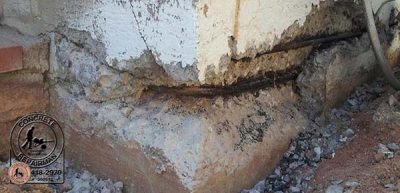
However, depending on the extent and nature of the damage, several maintenance or repair methods can be useful in extending the service life of such concrete. If the damage is detected early and is shallow (less than 1.5 inches deep), application of concrete sealing compounds, such as the high solids content (greater than 15 percent) oligomeric alkylalkoxy siloxane or silane systems or the high molecular weight methacrylic monomer system, will reduce water penetration and improve resistance to freeze and thaw spalling and deterioration. Such systems require re-application at 5- to 10-year intervals. Epoxy- bonded replacement concrete can be used to repair damage that extends between 1.5 and 6 inches into the concrete, and replacement concrete can be used to repair damage 6 inches deep or deeper.
Insufficient concrete cover over reinforcing steel is a common cause of damage to highway bridge structures. This can also be a problem in hydroelectric and irrigation structures. Reclamation usually requires a minimum of 3 inches of concrete cover over reinforcing steel, but this can be insufficient in corrosive environments. Concrete exposed to the corrosive effects of sulfates or chlorides should have a minimum of 4 inches of cover to protect the reinforcing steel. Insufficient cover allows corrosion of the reinforcing steel to begin. The iron oxide byproducts of this corrosion require more space in the concrete than the reinforcing steel, resulting in cracking and delamination in the concrete.
Failure to provide adequate contraction joints or make expansion joints wide enough to accommodate temperature expansion in concrete slabs will result in damage. Concrete with inadequate contraction joints will crack and make a joint wherever a joint was needed but not provided. Unfortunately, such cracks will not be as visually attractive as a formed or sawed joint.
Formation of the cracks relieves the tensile stresses and, though unsightly, seldom requires repair. Concrete slabs constructed with insufficient or too narrow expansion joints can cause serious damage to bridge surfaces, dam roadways, and the floors of long, steeply sloping, south-facing spillways. Such concrete experiences large daily and seasonal temperature changes resulting from solar radiation. The resulting concrete expansion is greater in the top surfaces of the slabs, where the concrete temperatures are higher, and less in the cooler bottom edges. Such expansion can cause the upper portions of concrete in adjacent slabs to butt against one another at the joints between the slabs. The only possible direction of relief movement in such slabs is upward, which causes delaminations to form in the concrete, starting at the joints and extending an inch or two back into the slab. These delaminations are commonly located at the top mat of reinforcing steel. In temperate climates, the formation of delaminations relieves the expansion strains, and further damage will usually cease. However, water can enter the delaminations in cold climates, undergoing a daily cycle of freezing and thawing. This causes the delaminations to grow and extend 3 to 5 feet away from the joint.
Repairing damage caused by faulty design is futile until the design faults have been mitigated. Embedded metal features can be removed, handrails can be provided with slip joints, and guardrail attachment bases can be moved to locations with sufficient concrete to withstand the tensile forces. Mitigating insufficient concrete cover over reinforcing steel is very difficult, but repair materials resistant to those types of corrosion can be selected for the repair. Concrete sealing compounds or coatings can also protect repairs to reduce water penetration. Slabs containing inadequate expansion joints can be saw cut to increase the number of joints and/or to widen the joints to provide sufficient room for the expected thermal expansion.
Recent Foundation Repair Projects by Concrete Repairman
How To Fix Horizontal Foundation Cracks
What is the Best Way to Repair Foundation Cracks? A well-trained contractor can determine what the problem is and then determine the best way to fix it. While this process will take several days, some foundation cracks are caused by improperly poured concrete. For example, if the slab is uneven, cutting away sections of the concrete base may be necessary to get the cracks fixed. An experienced contractor can provide you with the cutting methods to repair your foundation cracks properly.
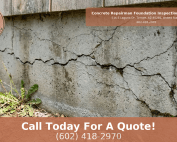
Foundation Repair Versus Replacement: What Phoenix Homeowners Deserve to Know
Key Takeaways: Foundation repair versus replacement is rarely black-and-white — Phoenix's expansive clay soil creates unique conditions that demand honest, individualized assessment from a qualified master craftsman. ROC licensing (such as ROC 300512 held

How to Choose Foundation Repair Contractors in Phoenix: The Criteria That Actually Matter
Key Takeaways: Hiring the right foundation repair contractor in Phoenix requires evaluating hands-on mastery, teaching credentials, and ROC licensing — not just marketing claims. Phoenix's expansive clay soils demand specialized local knowledge that generational

How to Evaluate Foundation Repair Contractor Credentials in Arizona
Key Takeaways: Arizona ROC licensing is the legal baseline for foundation repair contractors, but third-generation mastery, teaching credentials, and media recognition signal a far higher level of expertise. Verifying a foundation repair contractor's credentials

Why Master Craftsmen Are Redefining the Standard for Foundation Repair Contractors in Phoenix
Key Takeaways: Third-generation foundation expertise, like that of James Belville of Concrete Repairman LLC, means your contractor understands how repairs perform over decades — not just at the time of installation. Teaching credentials and
FAQs About Concrete Foundation Repair
Why Trust Concrete Repairman
James Belville – Foundation Repairman™ – 480-725-7614
At Concrete Repairman LLC, we are proud to be a third generation foundation repair company with over 30 years of hands on experience. Led by James Belville, a master in concrete foundation repair, our team has served homeowners in Phoenix, Arizona, with unparalleled expertise and dedication. Floor grinding outcomes depend on the right tooling, a controlled approach, and understanding how the surface preparation affects the next finish system. Experience also matters when grinding intersects with broader slab performance concerns such as settlement, cracking, and edge movement.
Concrete Repairman LLC. Roc 300512 Licensed-Bonded-Insured Contractors of Arizona.

A Legacy of Excellence in Foundation Repair
With over 30 years of hands-on experience, James Belville and the team at Concrete Repairman LLC have established themselves as trusted experts in foundation repair throughout the Phoenix Metro Area, serving communities like Ahwatukee, Mesa, Chandler, Scottsdale, and beyond. Our reputation for delivering high-quality repair solutions is rooted in our unwavering commitment to excellence, ensuring that every project is completed with the utmost precision and care.
At Concrete Repairman LLC, we pride ourselves on being fully licensed, bonded, and insured, offering peace of mind to homeowners who entrust us with their foundation repairs. Our team of professionals prioritizes safety, quality workmanship, and complete customer satisfaction. We stand behind every repair with industry-leading warranties, demonstrating our confidence in the long-lasting durability of our services. Whether addressing small cracks or more significant foundation issues, we are committed to protecting the integrity of your home.
One of the common issues we encounter in Arizona foundations is efflorescence, a crystalline deposit caused by moisture intrusion. While it may appear harmless initially, efflorescence can be a warning sign of underlying problems such as cracks, stem wall deterioration, or basement moisture. Left unchecked, these issues can lead to significant structural damage. Our team specializes in diagnosing and repairing these moisture-related concerns, offering tailored solutions that prevent further damage and maintain your home’s long-term stability.
At Concrete Repairman LLC, call our Foundation Repair office in the Greater Phoenix Metro Area, including Gilbert, Glendale, Queen Creek, and Sun City. If you suspect foundation damage or want to protect your home from potential issues, contact us at (602) 418-2970. Our expert team is ready to inspect thoroughly and offer the best repair solutions to safeguard your home for years.
